Improving the out-of-stock experience
Shipt’s three sided delivery marketplace provides value through convenience. That value erodes when items aren’t available. As the consumer core design lead, I drove the discovery, strategy, and design to improve the out-of-stock experience.
Target saw the impact of this feature and translated it onto the Target App.
Some details have been modified or omitted to protect confidentiality. The success, however, is real.

Project Details
My Role
Lead product designer for the consumer app (iOS + android) and responsive website
The Team
2 User Researchers, 1 PM, 2 Data Scientists, 4 Frontend Engineers, 2 Backend Engineers
Timeline
1 year
User Needs
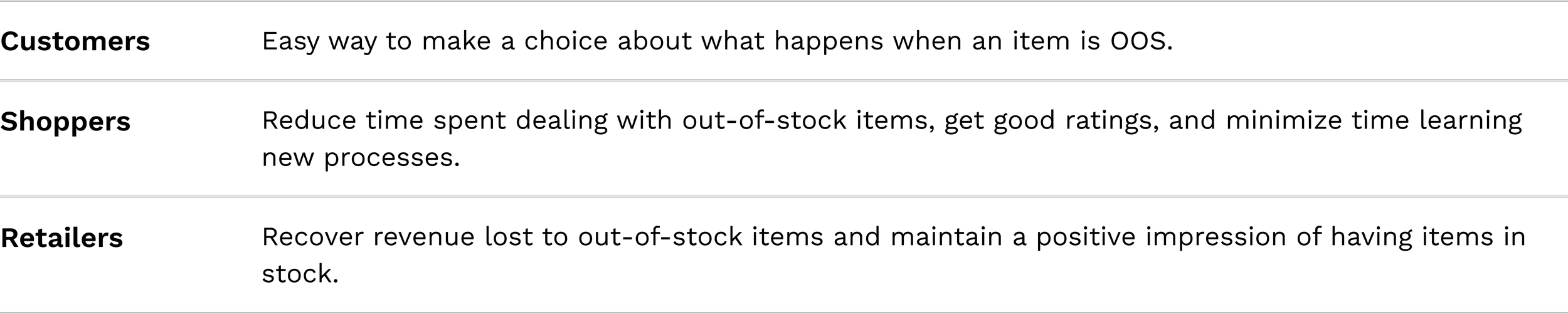
Even though my designs were for Shipt consumers, as with all Shipt projects it was important to account for all the users that would be impacted.
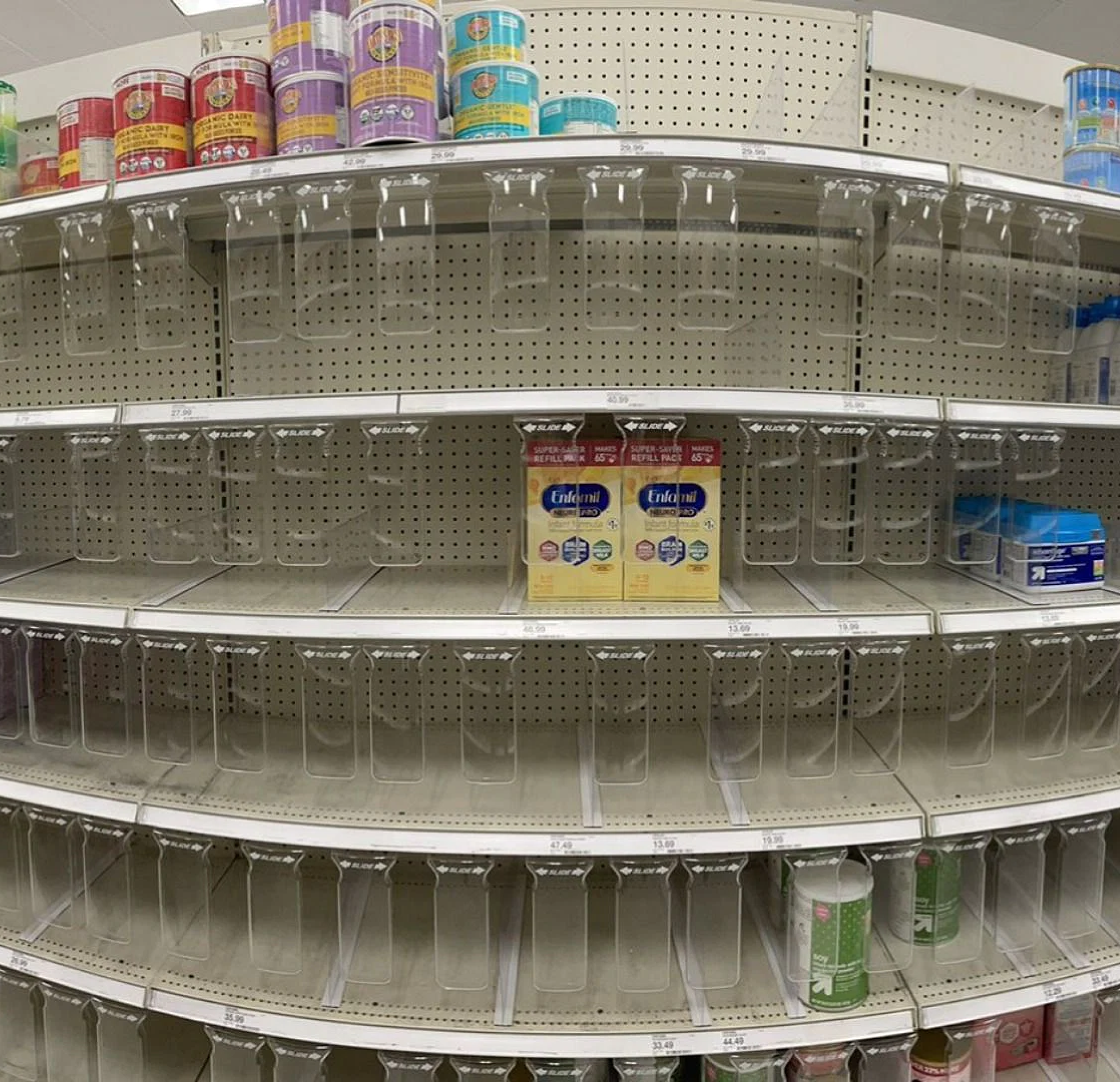
Since our team couldn’t make sure products were on shelves, we reframed to problem:
Decrease out-of-stock items
Improve the out-of-stock experience for customers and reduce lost revenue while minimally changing existing shopper workflows?
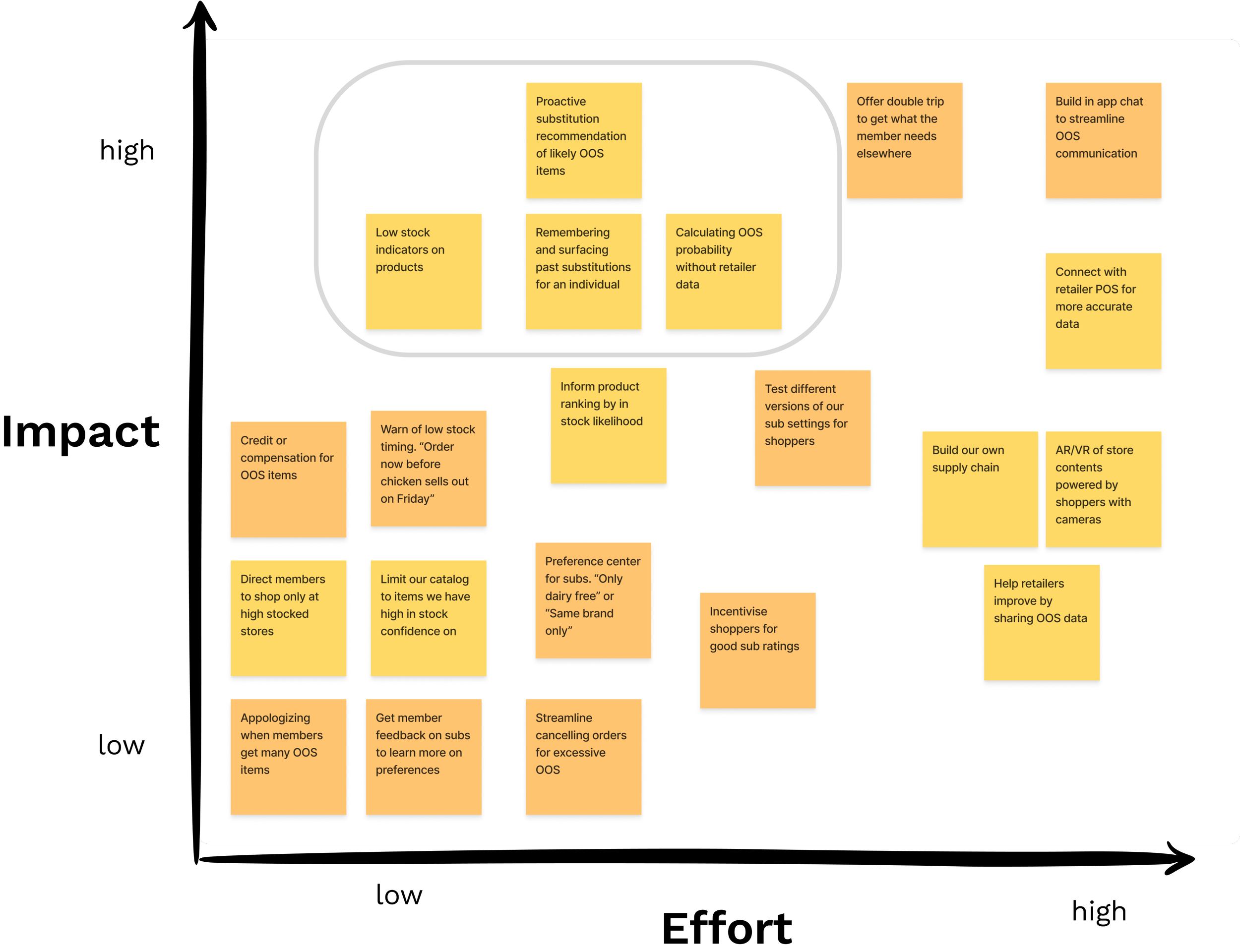
Evaluating Solutions
Action:
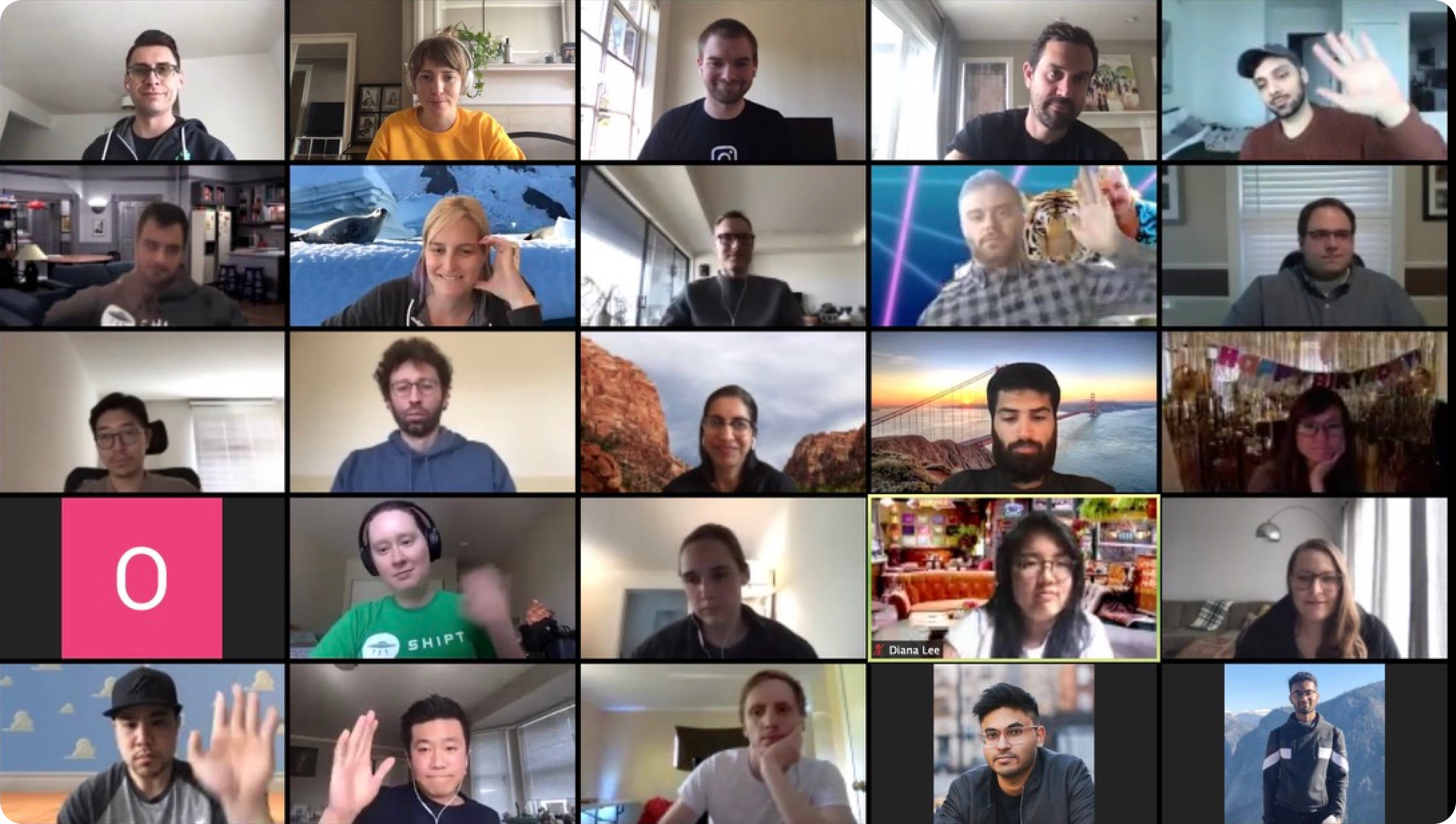
I designed and lead a series of ideation sessions including the broader team to align on direction and collect varied perspectives. The exercises included Crazy 8s, effort vs impact mapping, and dot voting on ideas to pursue.
Impact:
Avoided time wasted on technically implausible solutions
Created empathy for the user problem throughout the team not just for the design and research folks
Created a shared vision of our path forward across three different teams with disparate goals
Design Exploration
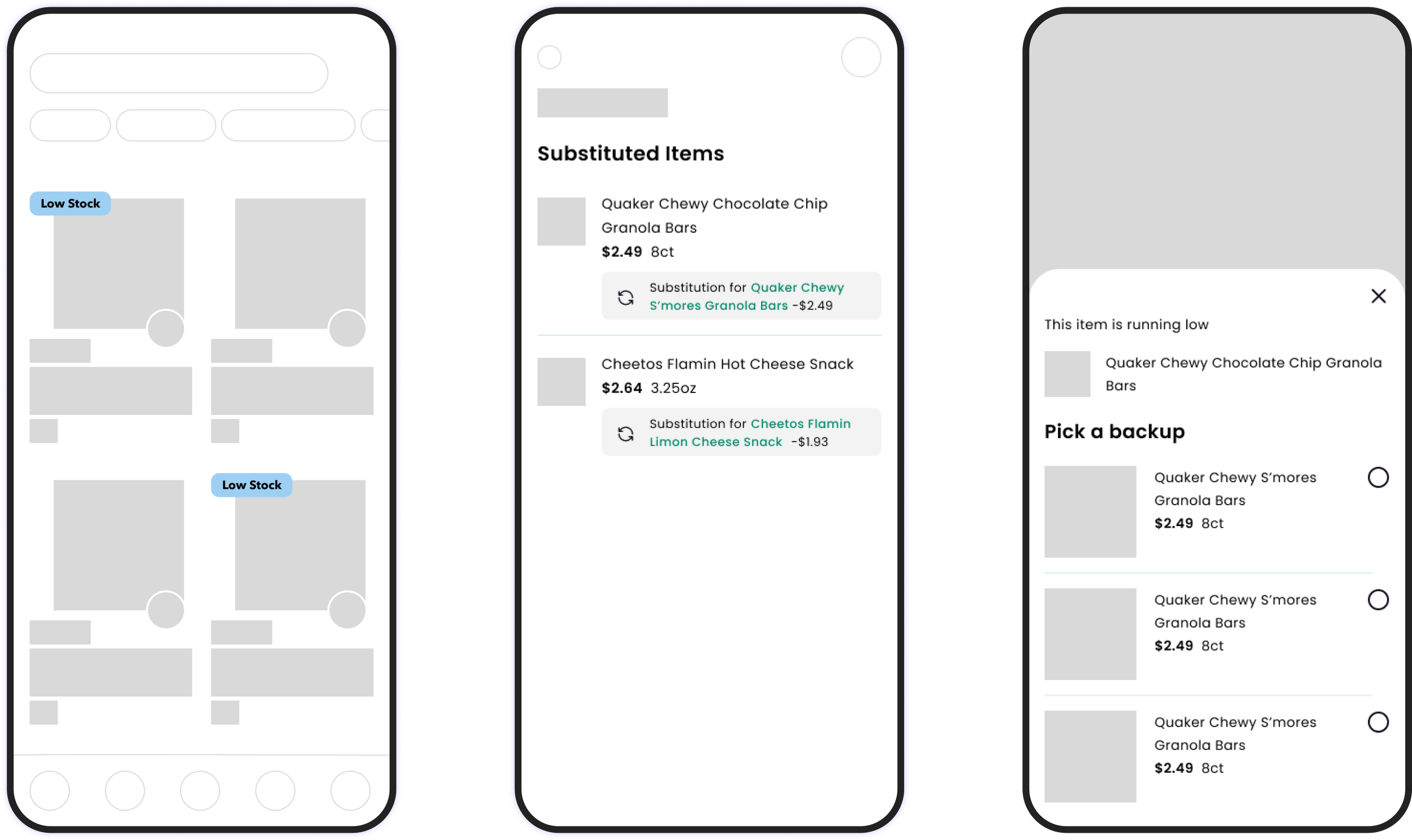
After identifying the high impact areas to tackle, I started sketching and wireframing to explore solutions and collect feedback from the team on engineering scope.
To expedite the process of going from wireframes to high fidelity designs, I made a series of UI wireframe components with the same dimensions as our design system components. Using these realistic components sped up my design process going forward.
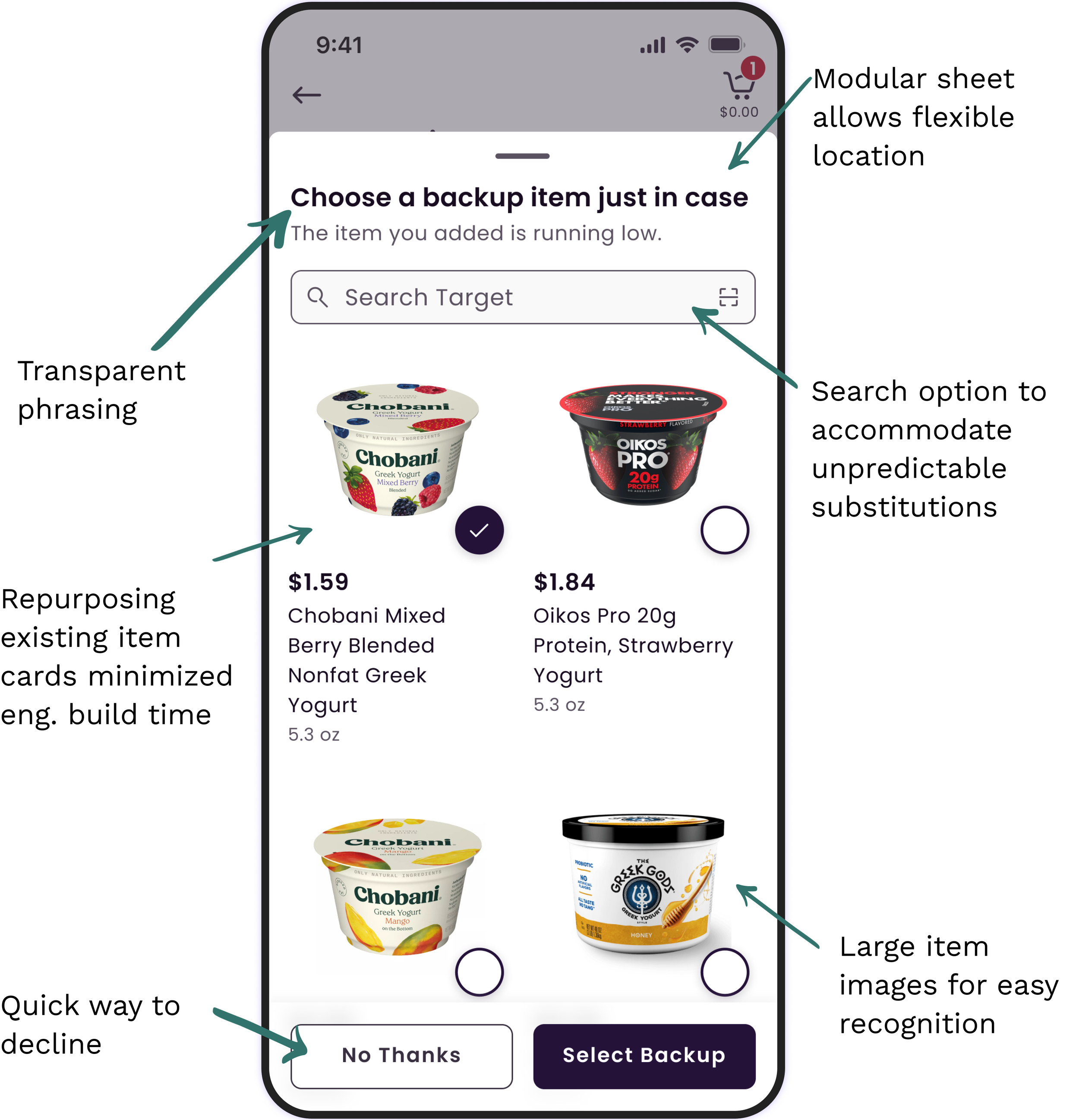
Design version 1
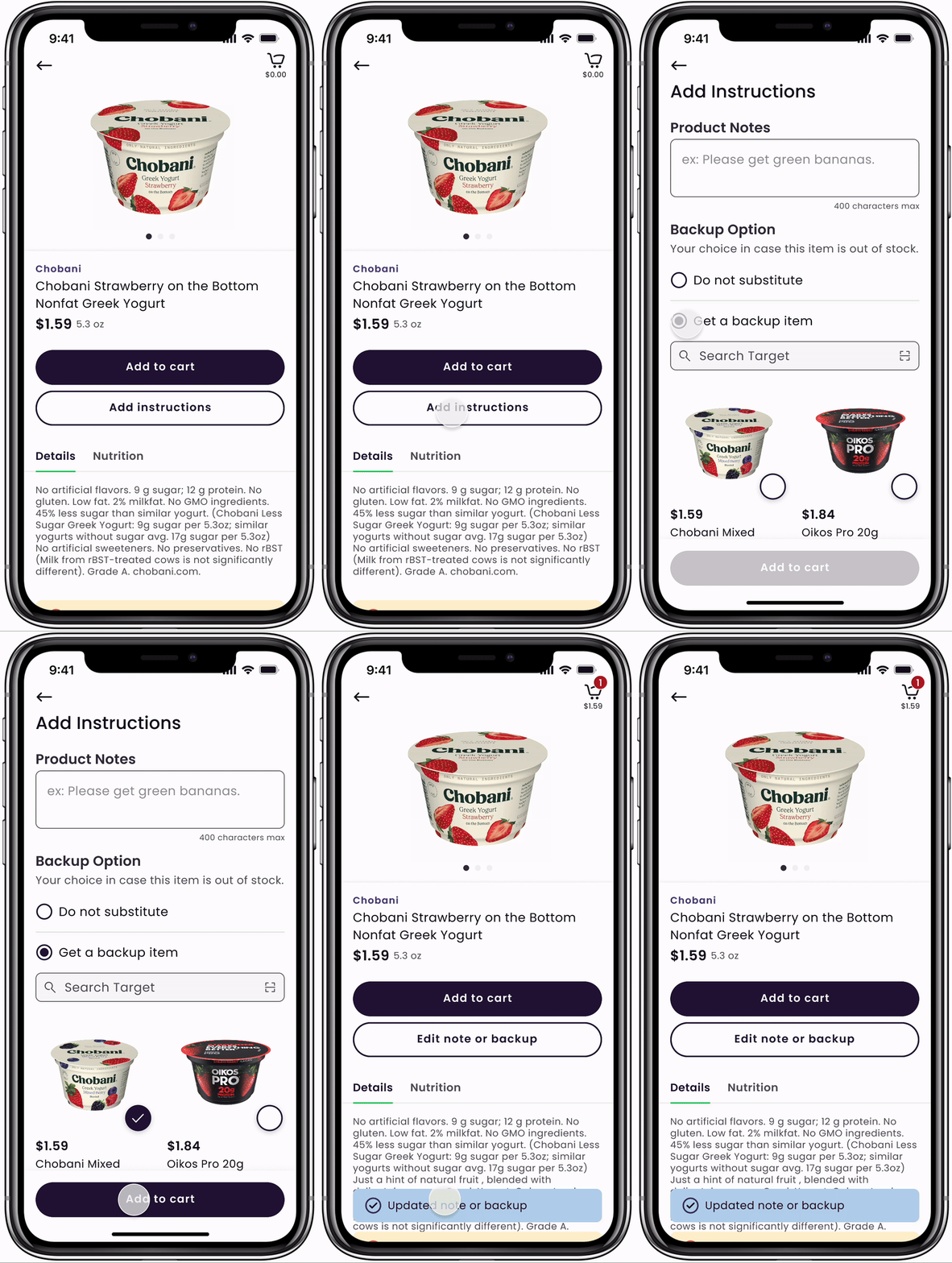
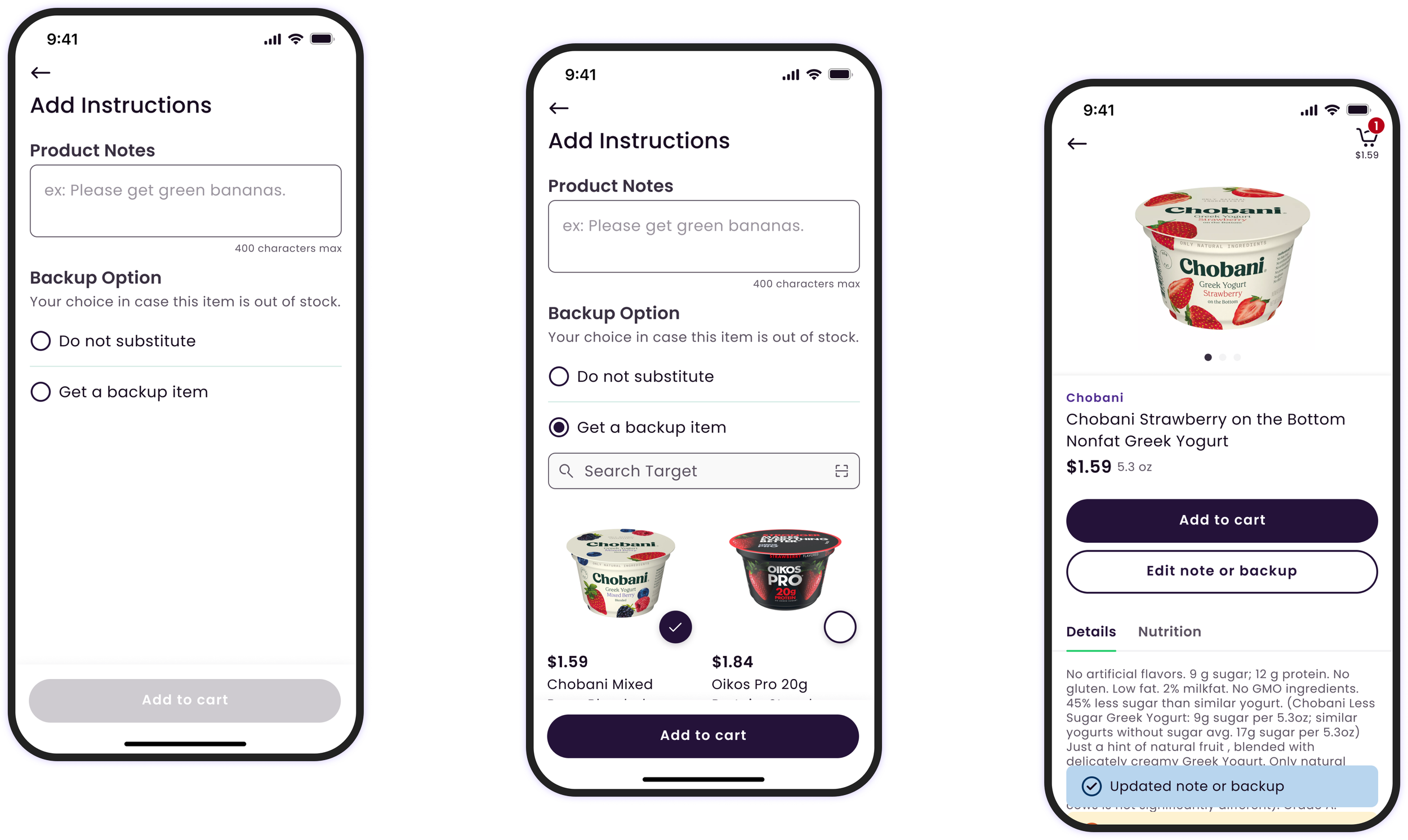
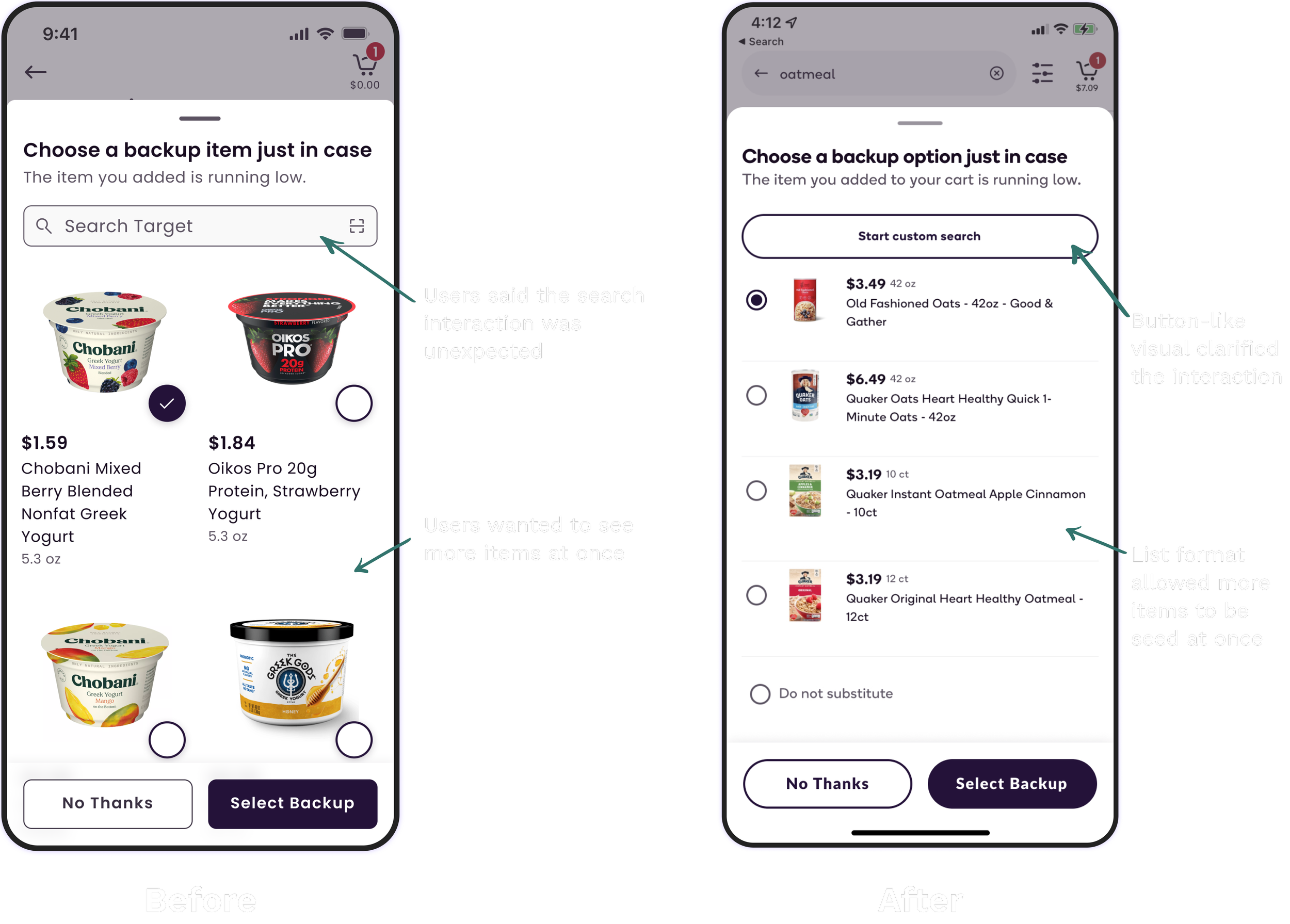
After considering a variety of solutions, this was the first design that met all the user needs and seemed feasible to implement. To get informed feedback I created a prototype of the user flow for testing.
Usability Testing
For testing I recruited 14 participants who were half users familiar with Shipt and half non-users. I designed the questionnaire, ran an unmoderated study on UserTesting.com, and summarized the findings.
Task completion was successful for 100% of both user types. In response to more open ended questions users had an overall positive impression and the Shipt users thought this feature would be useful.
Mapping the Edge Cases
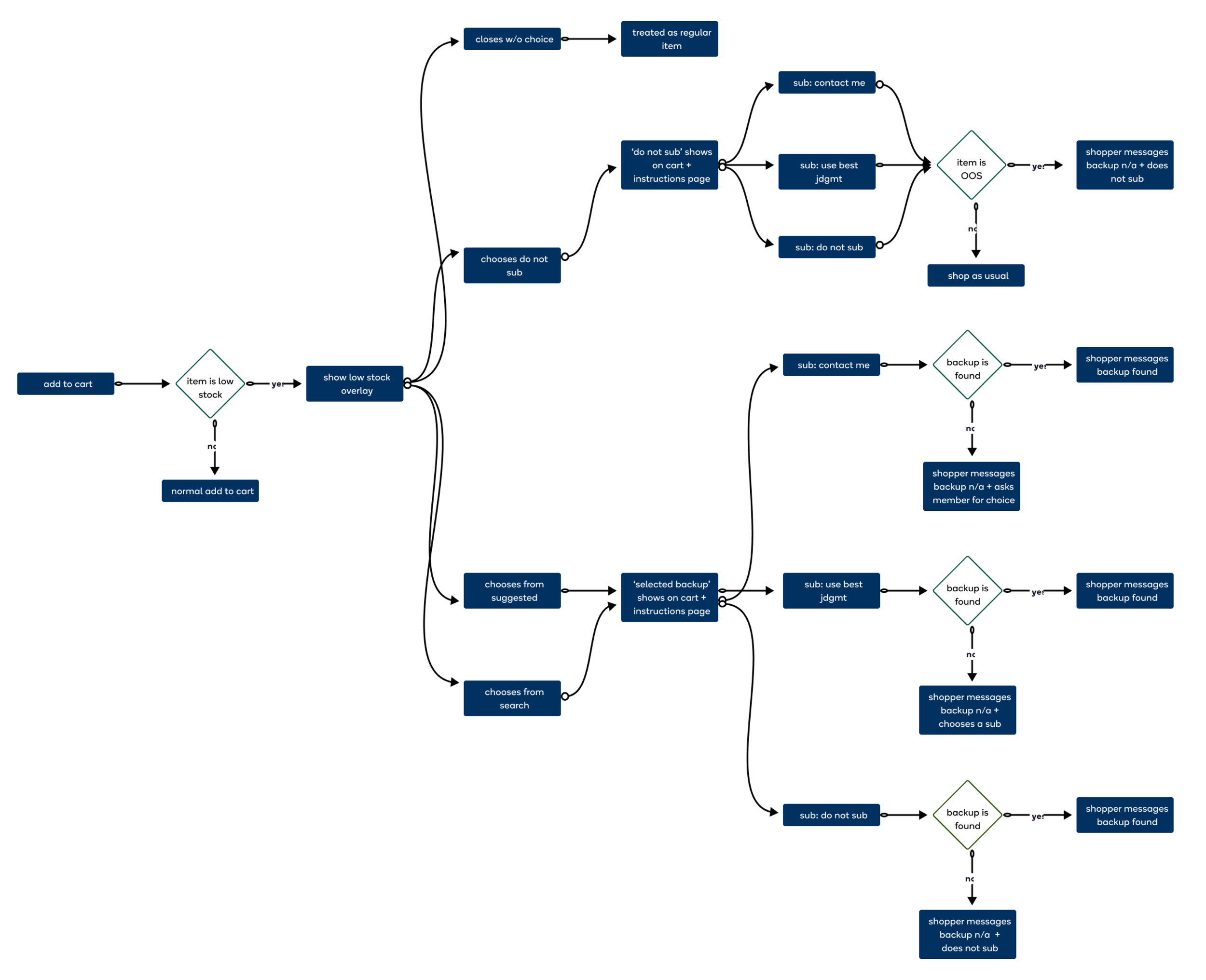
Once we identified our first version solution, it was important to be sure the design supported every possible use case both from a user perspective and considering the technical requirements including 0 changes to the existing order offering back end system. I made this diagram to align the team (especially engineering) on the various scenarios that could arise and how they would be handled. This map was later used to write technical requirements and tickets.
Results
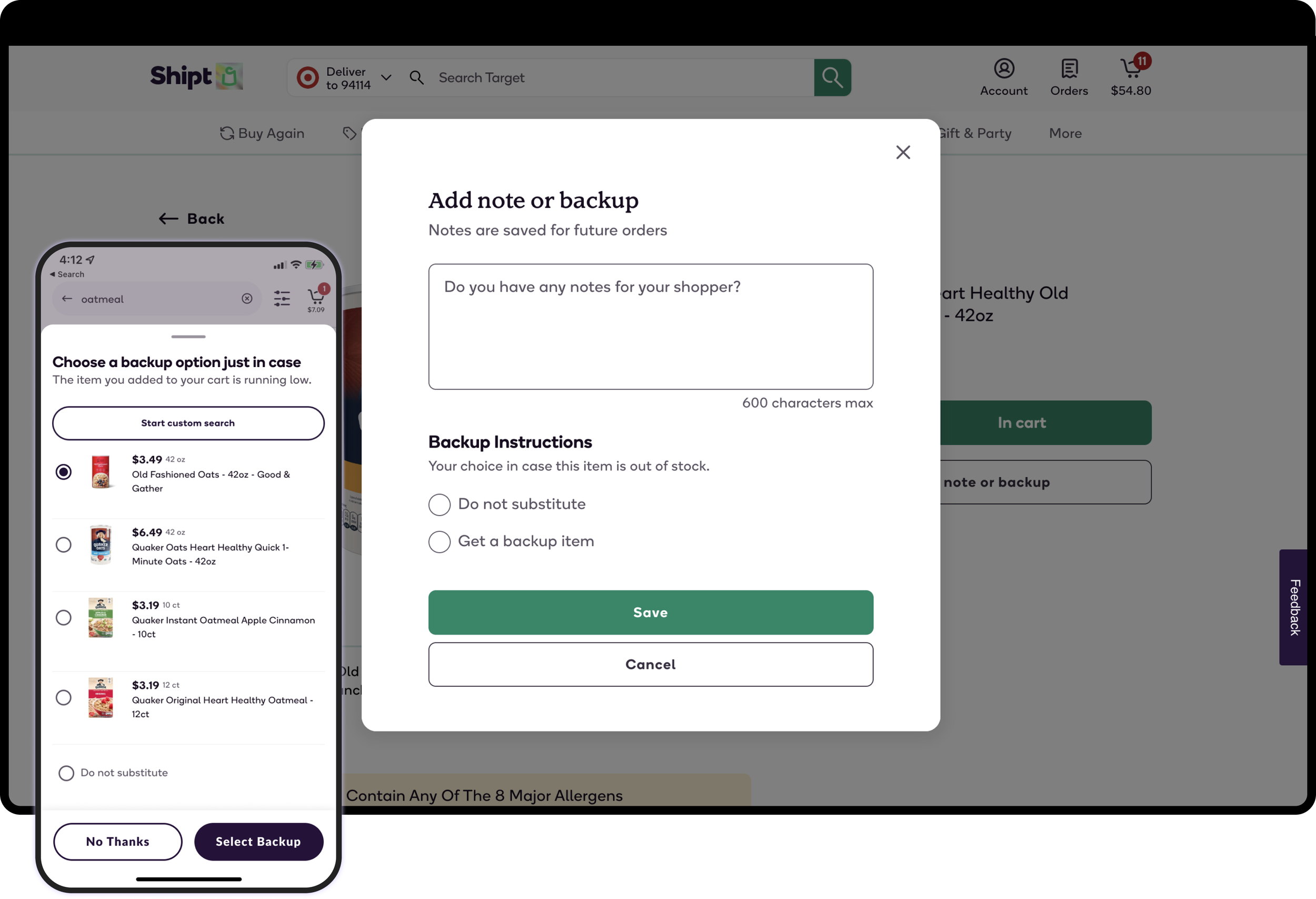
Our first launch results were extremely positive. In addition to delivering more items that Shipt customers wanted, there was a significant savings to the business.
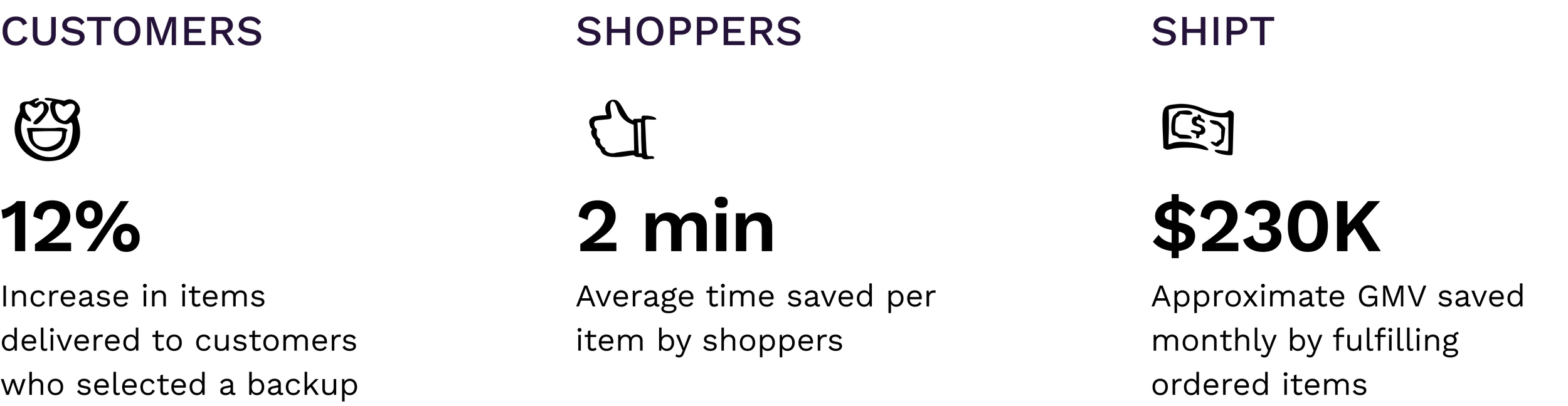
The success of this feature led to increased company investment in improving the out-of-stock experience
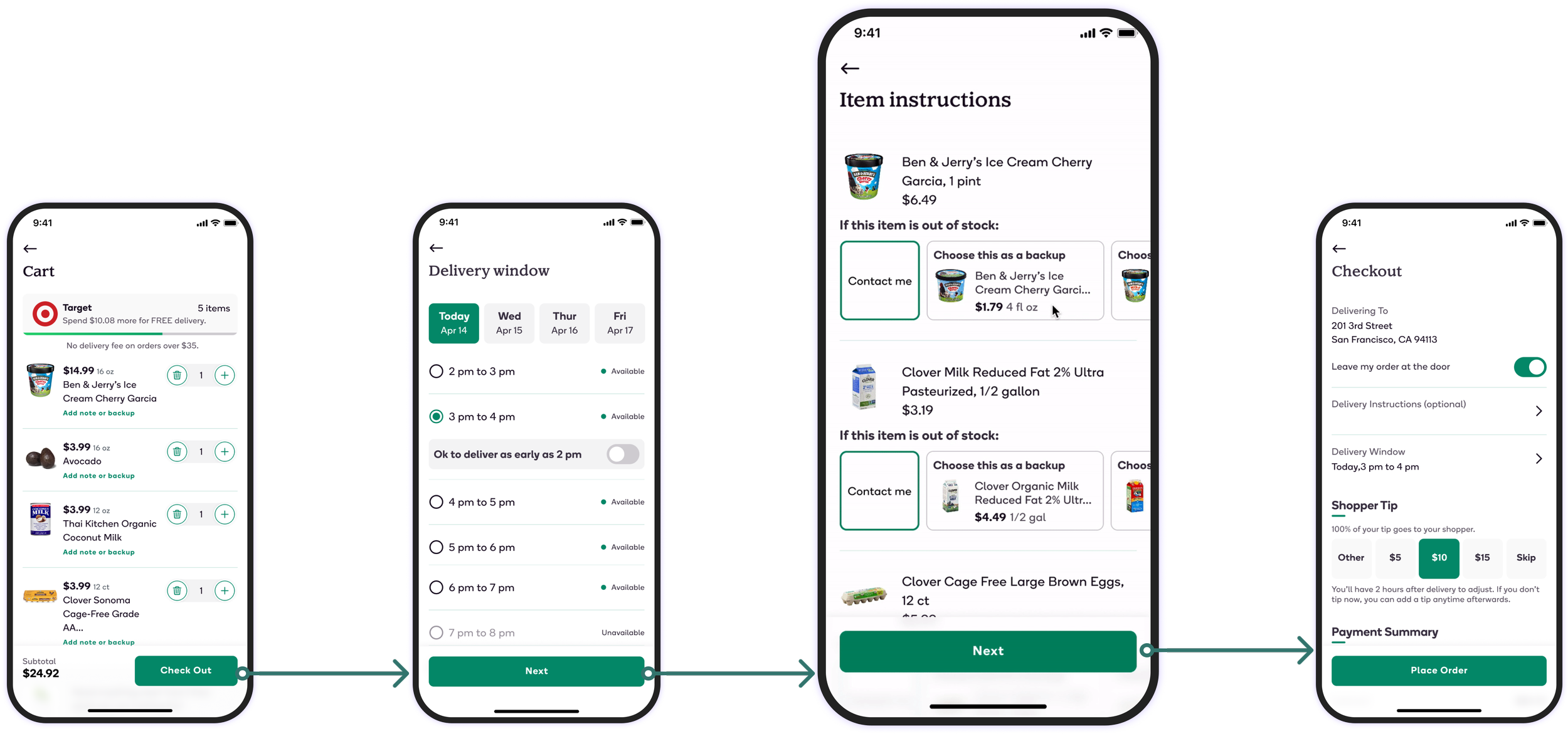
Because of the success of the first version, Shipt continued to invest in work to improve the out-of stock experience. We were able to iterate on the above ‘in shopping’ experience as well as test out an additional touch point for customers to add out-of-stock settings in the checkout flow. You can see my designs here:
Sharing the backup feature with Target
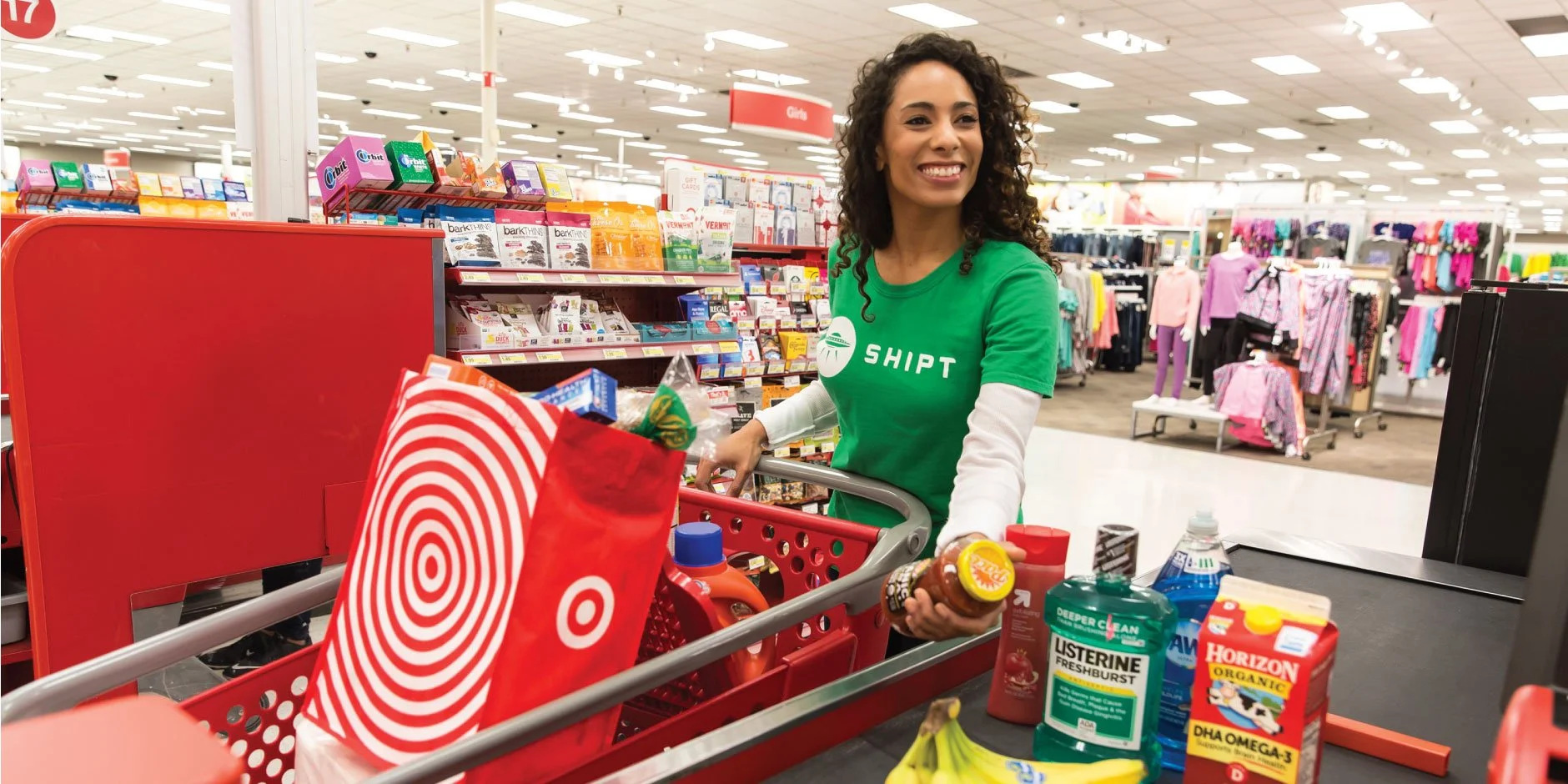
After seeing the success Shipt had using backups, the UX team at Target reached out to us. After meeting to share our insights and challenges with their team, Target implementing the same feature into their app.