Autopilot: An automatic ordering feature
In this high priority project at Shipt, we explored how to automate the inherently repetitive process of ordering groceries in a way that was genuinely helpful to users and translated to more orders.
I lead the comprehensive research, strategy, and design work to create this feature from scratch.
Some details have been modified or omitted to protect confidentiality. The success, however, is real.

Project Details
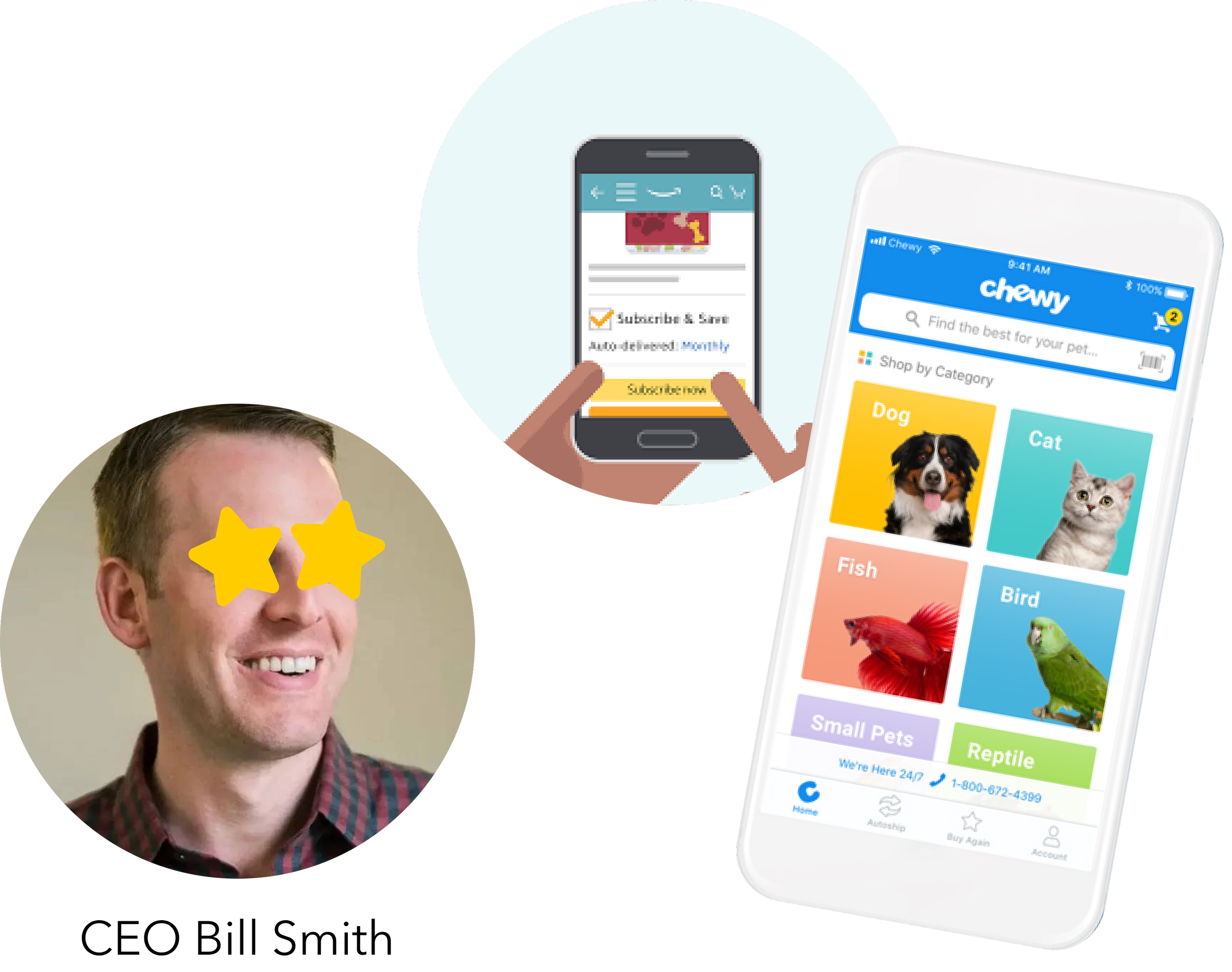
This project was the (former) CEO Bill Smith’s pet project which gave me experience in VIP stakeholder management.
My Role
Lead product designer for the consumer app (iOS + android) and responsive website
The Team
2 User Researchers, 1 PM, 2 Data Scientists, 4 Frontend Engineers, 2 Backend Engineers, 3 Brand Marketers, 1 Legal Counsel
Timeline
9 months

How might we automate ordering to save time and mental management while increasing order frequency?
Understanding User Needs
Qualifying pain points: Would an automatic ordering feature actually be useful?
Moderated user interviews allowed us to get deep understanding of users’ perspectives
Interviewed 11 people with a 50:50 mix of Shipt users and non-users
I wrote the script then paired with a user researcher to conduct interviews, summarize the findings, and share insights with the team
Quantifying pain points: What could we learn from existing data?
We worked with data science to answer questions like:
How often do people re order the exact same items?
What are the most common ordering cadences?
What are the characteristics of the users who order in this way?
Project Principles
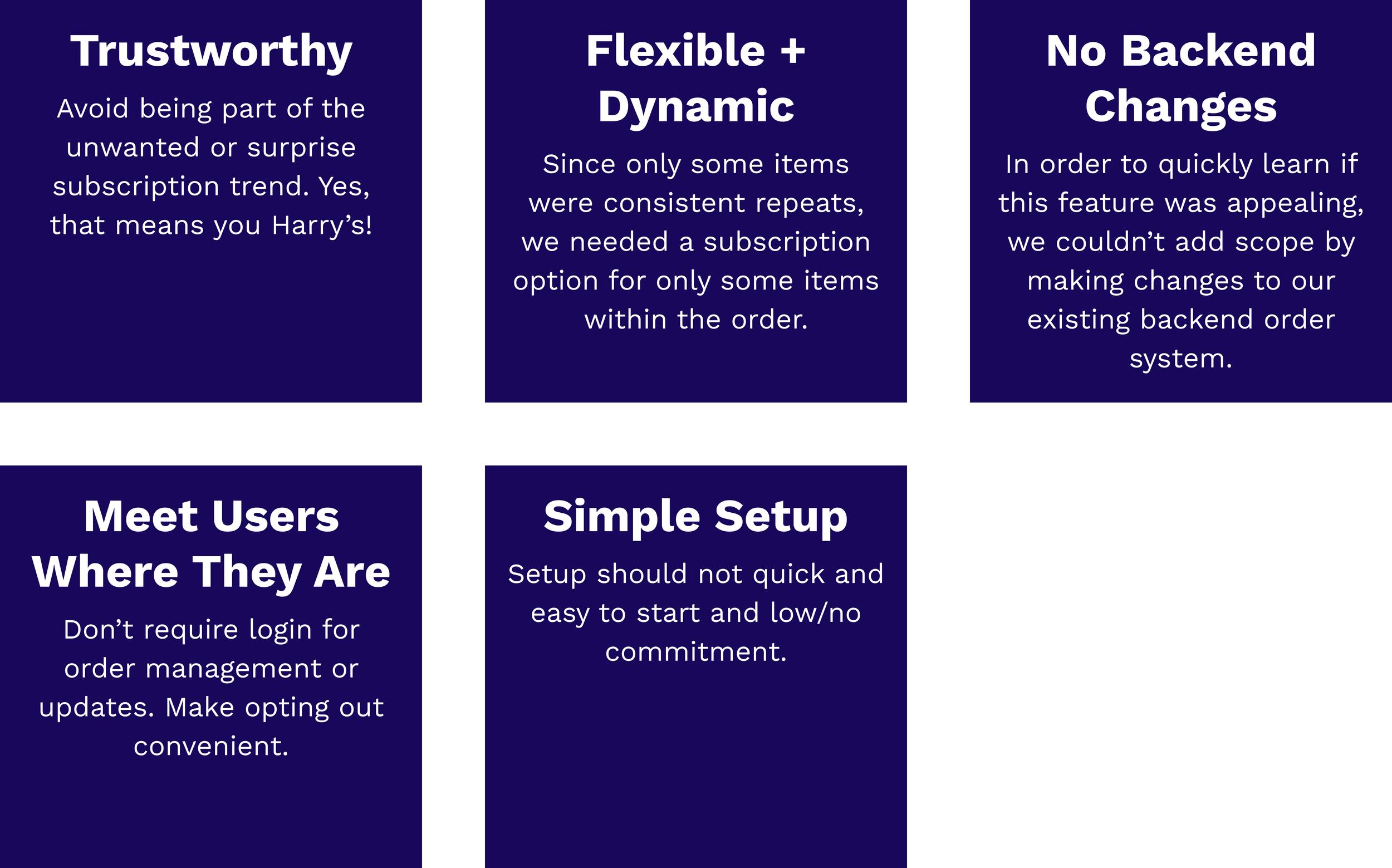
In order to let the user research guide my design work, I distilled these principles to use as a rubric along the way.
While it’s easy to get focused on a specific UI solution or particular suggestion from a colleague, this technique helps me prioritize the user needs rather than getting distracted by the details that often come with design work.
Ideation + Wireframes
For this project there were endless ways to answer the ‘how might we’ statement. Should we follow competitors examples and offer subscription to specific items? How flexible should our subscription be?
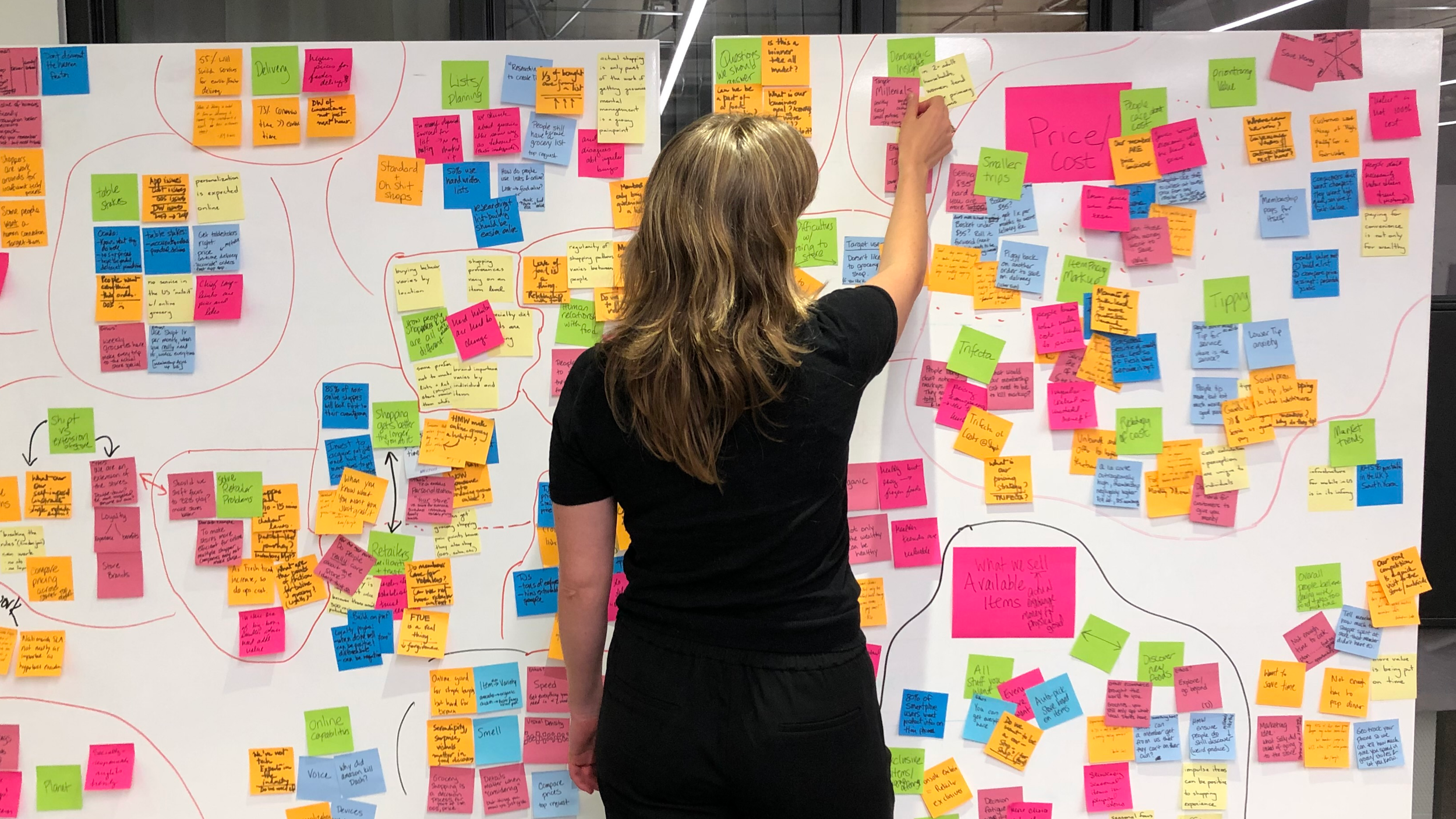
In order to explore broadly and generate ideas from a variety of team members, I lead an ideation workshop with the engineers, PM, marketing team, and data science. After sharing insights from our user research, we used Crazy 8’s to generate ideas and then refined the winning examples.
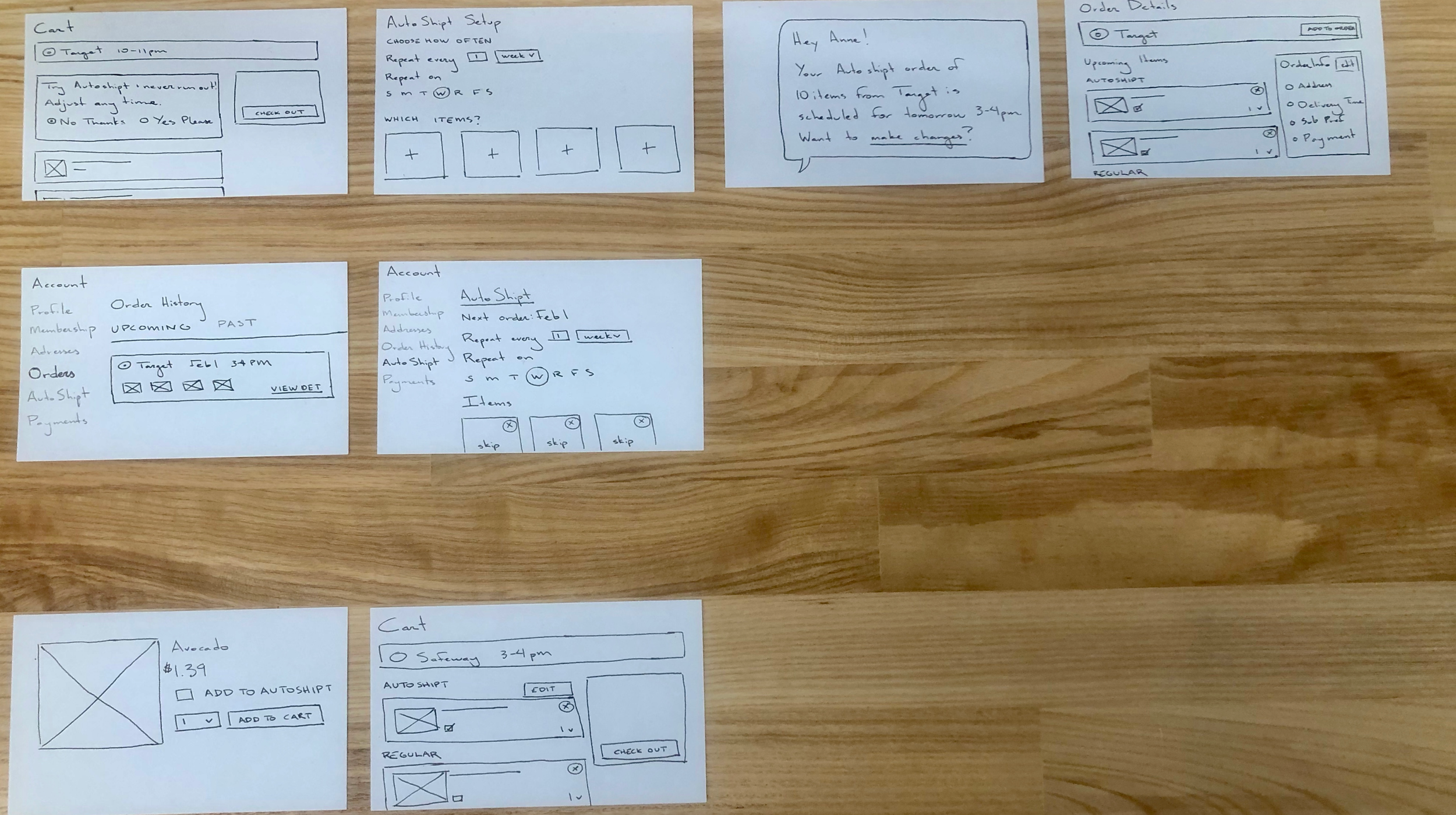
Where should the entry point be located?
One of the biggest questions was where this feature should appear. I ran competitive analysis to see where other subscription services prompted users.
While many pointed to adding a prompt within the checkout flow, we decided against that option to avoid the risk of negatively impacting checkout and decrease the technical complexity for the backend engineers. Instead we added a prompt immediately following checkout.
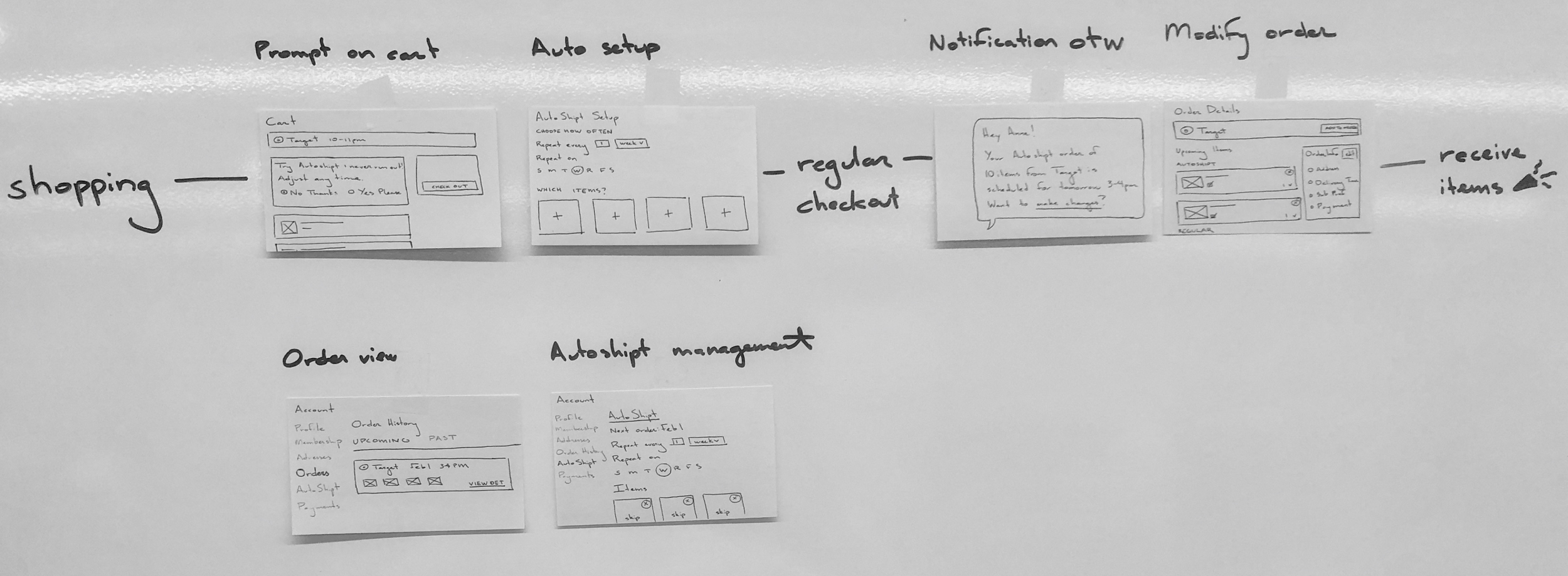
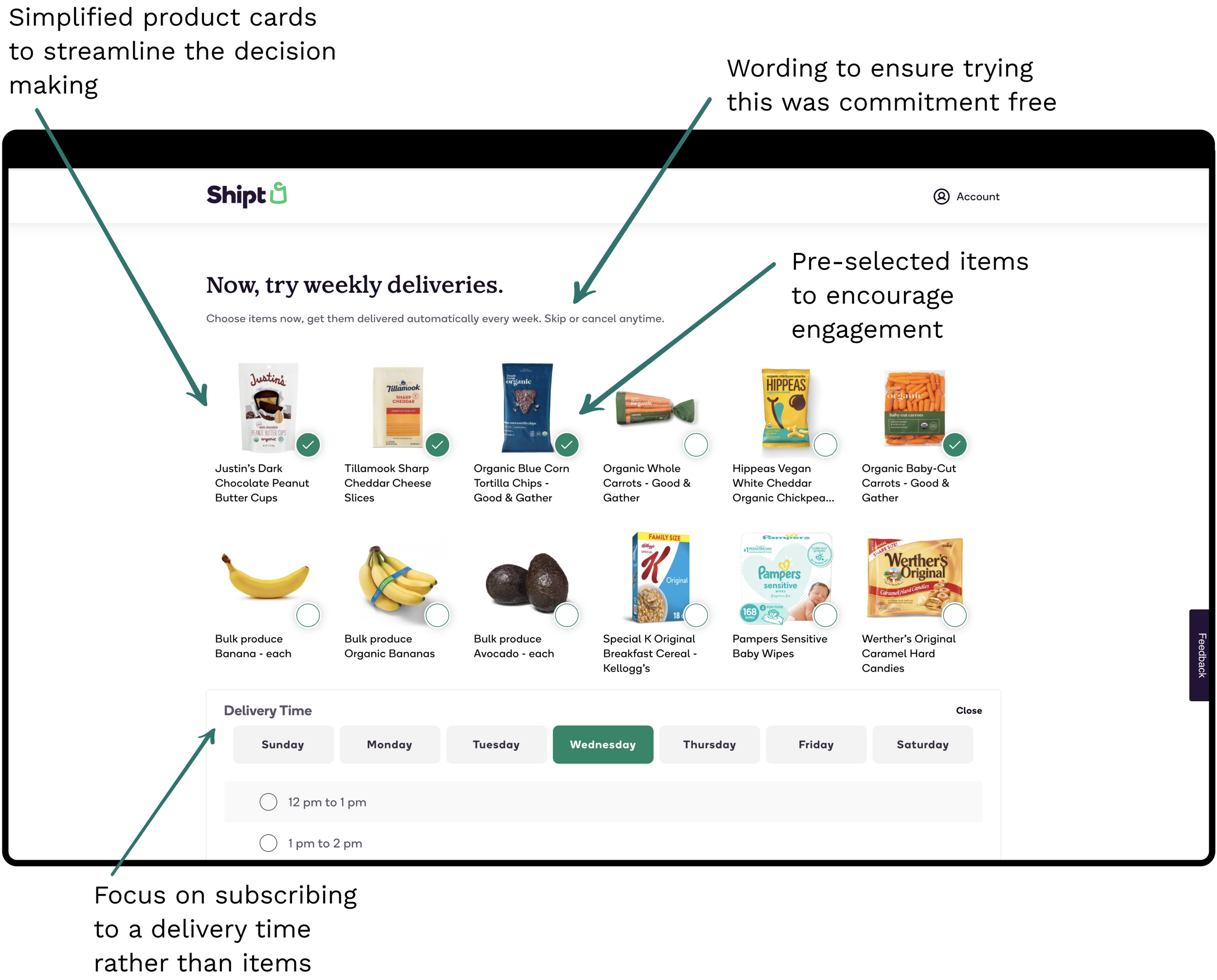
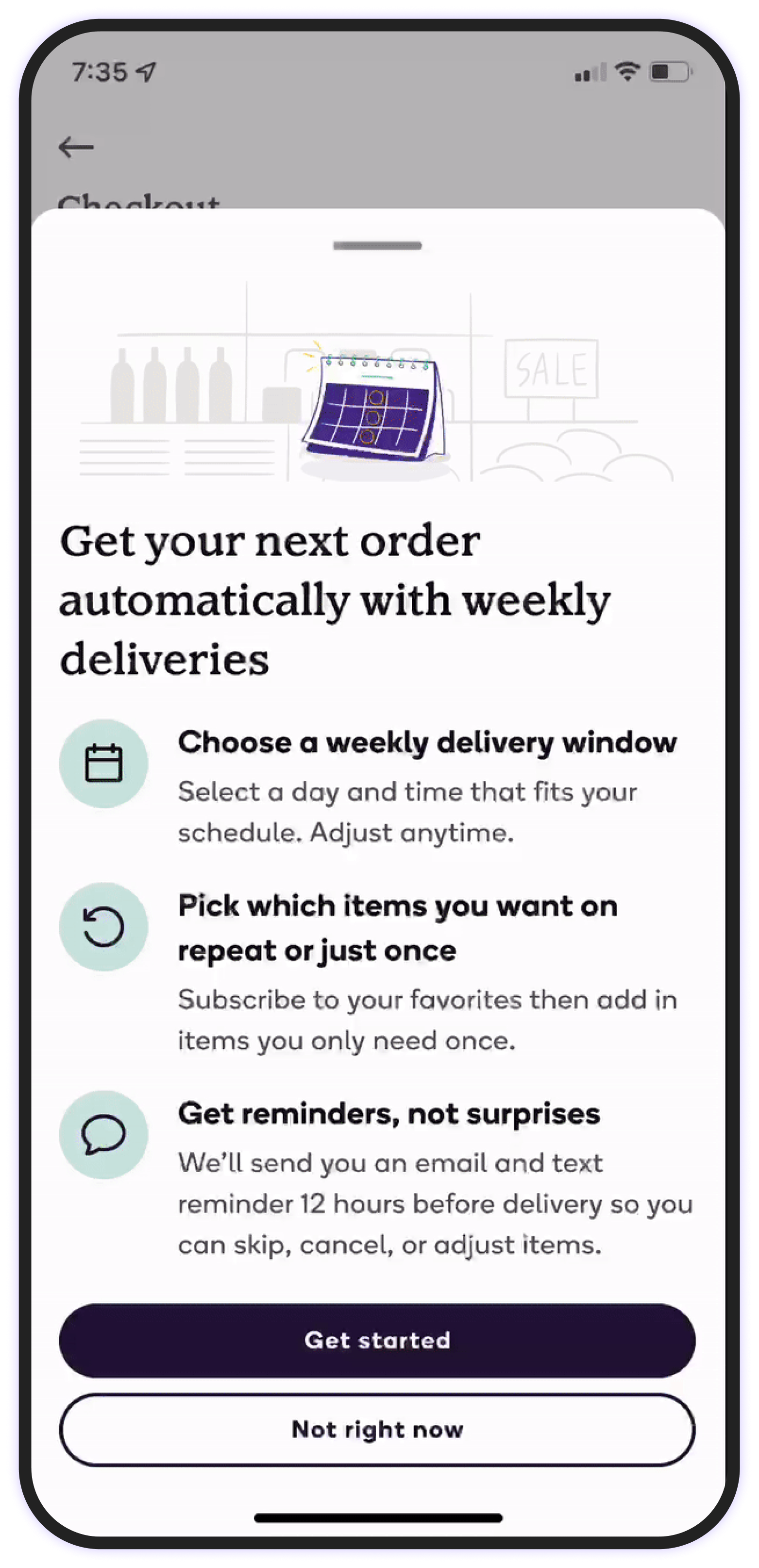
Version 1: Post order prompt
Goal: Make automated ordering lightweight and simple for users to try out and easy to cancel at any point.
Solution:
Showed pre selected items based on users’ most commonly ordered past items
Subscribe to a day and time rather than certain items
Ex: Subscribe to delveries Mondays at 6pm rather than milk, eggs, bread, yogurt, and coffee every Monday.
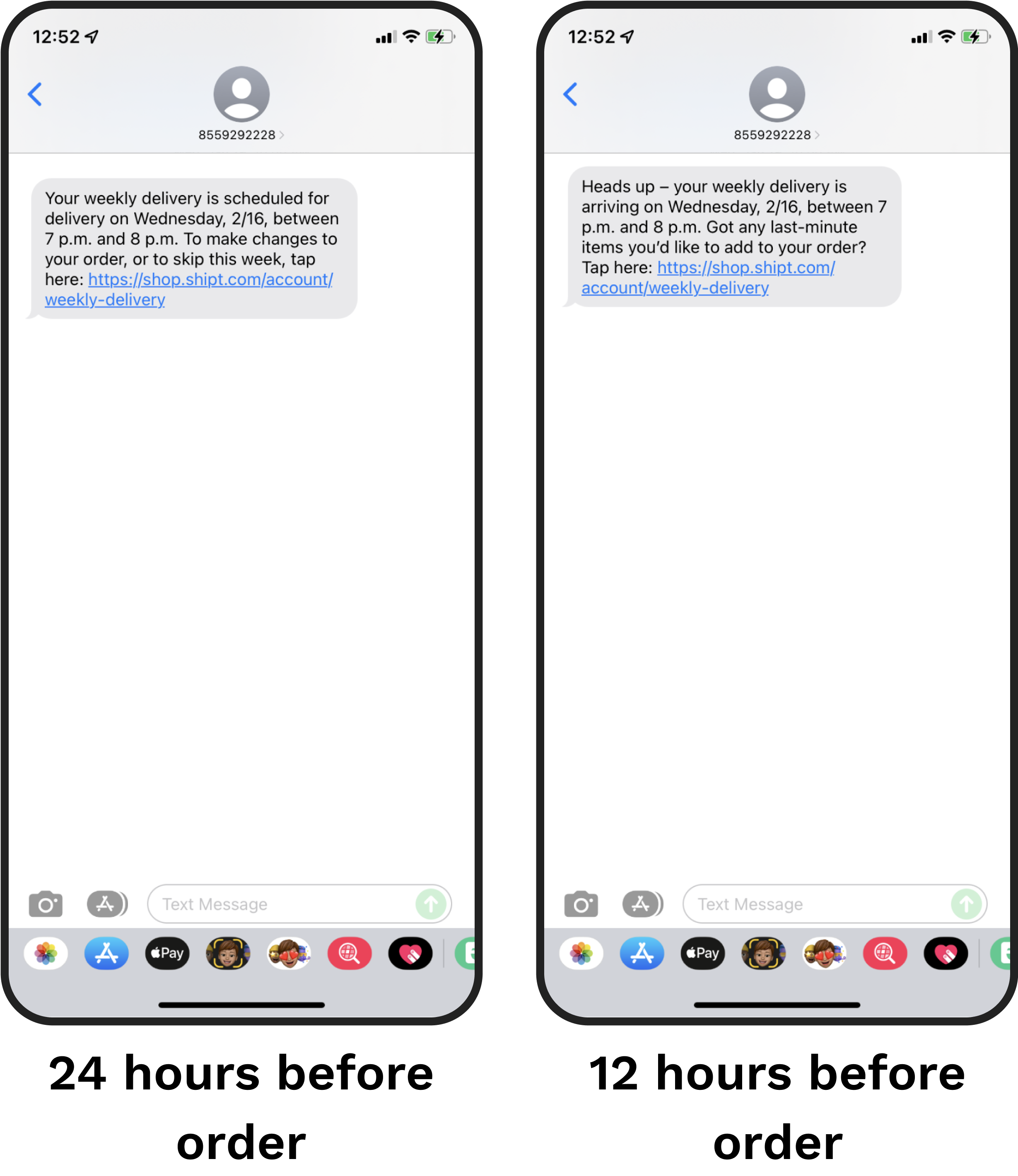
Advocating for Text Communication
Goal: Make automated ordering truly convenient and never an unpleasant surprise.
Solution
Reach users whether or not they logged into Shipt or checked their email by using texting
Using our user research and competitive analysis, I convinced the team that texting as a necessity for user satisfaction
First Launch Results
We launched the MVP design prior to user testing because of the complexity of backend integration into a prototype and the urgency of our timeline.
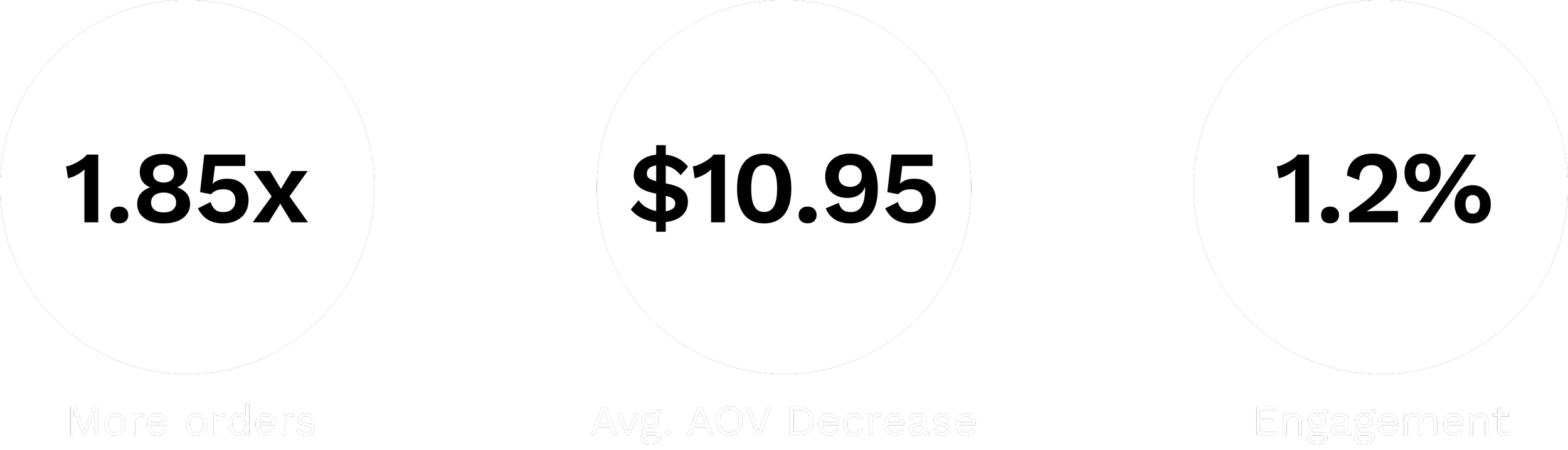
The results were positive from both an engagement and revenue perspective. While per order value was slightly decreased, the increase in order cadence more than made up for it in total revenue.
Usability testing findings
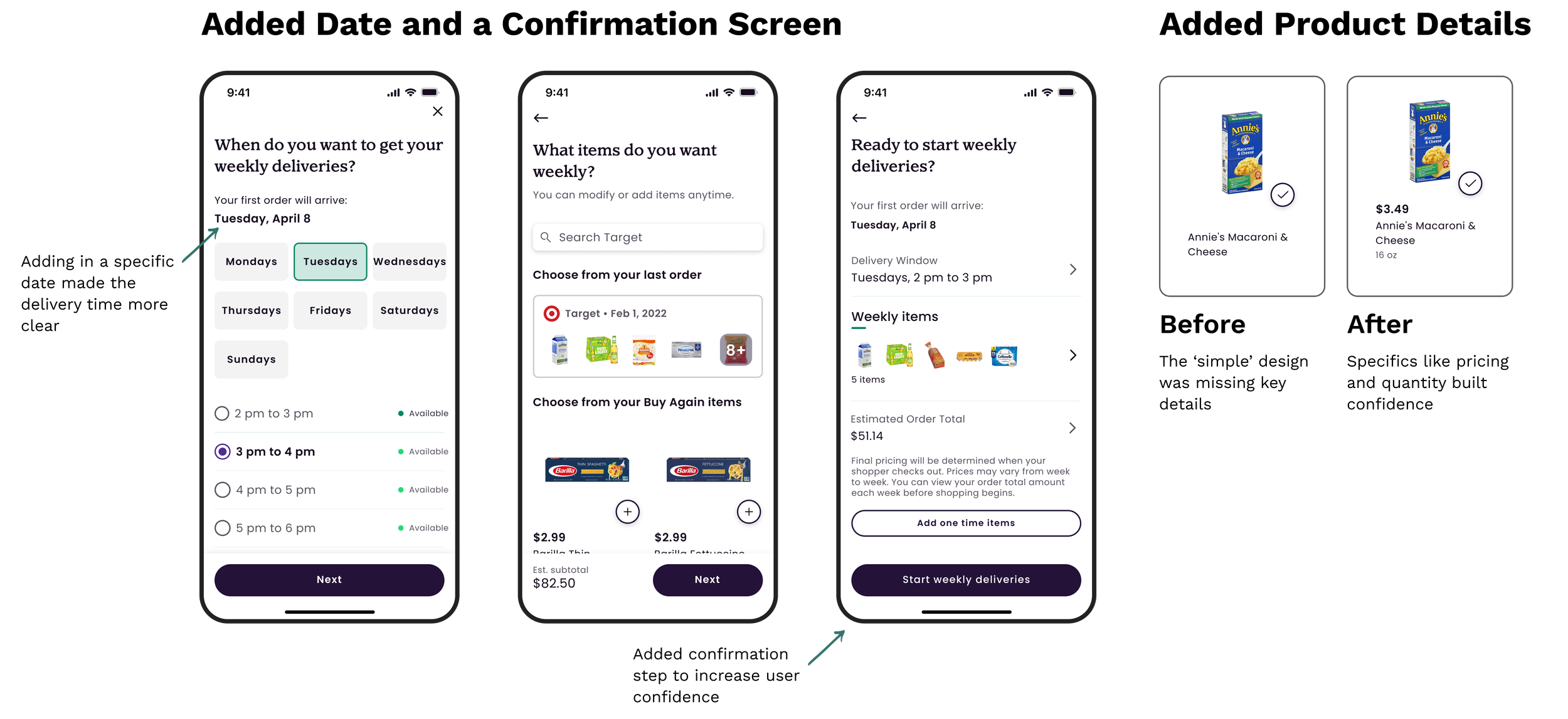
What was intended as ‘simple’ and ‘streamlined’ was actually unclear and confusing for users 🫣
I wrote the script, built the prototype, and ran unmoderated user testing for 12 people who were a mix of Shipt and non-Shipt users.
Applying Usability Test Learnings
But then the pandemic hit…
Project paused due to Covid
Demand for grocery delivery skyrocketed and automated orders were logistically not possible because of stock problems
I pivoted to addressing Covid related issues like no contact deliveries, product item limits, and communicating shopper delays.